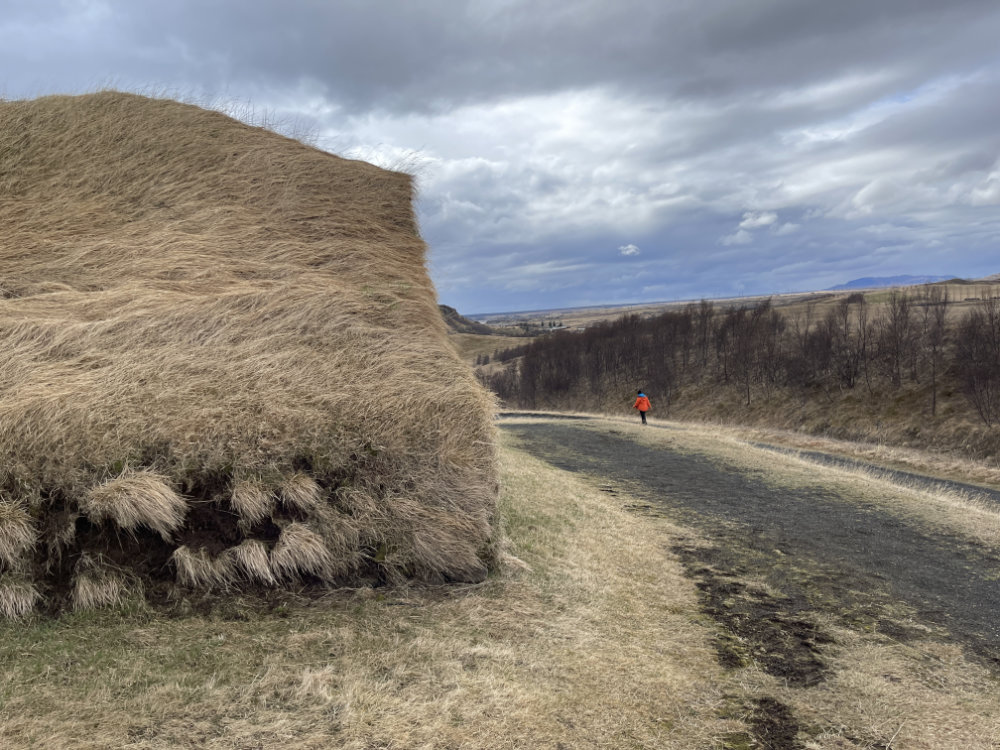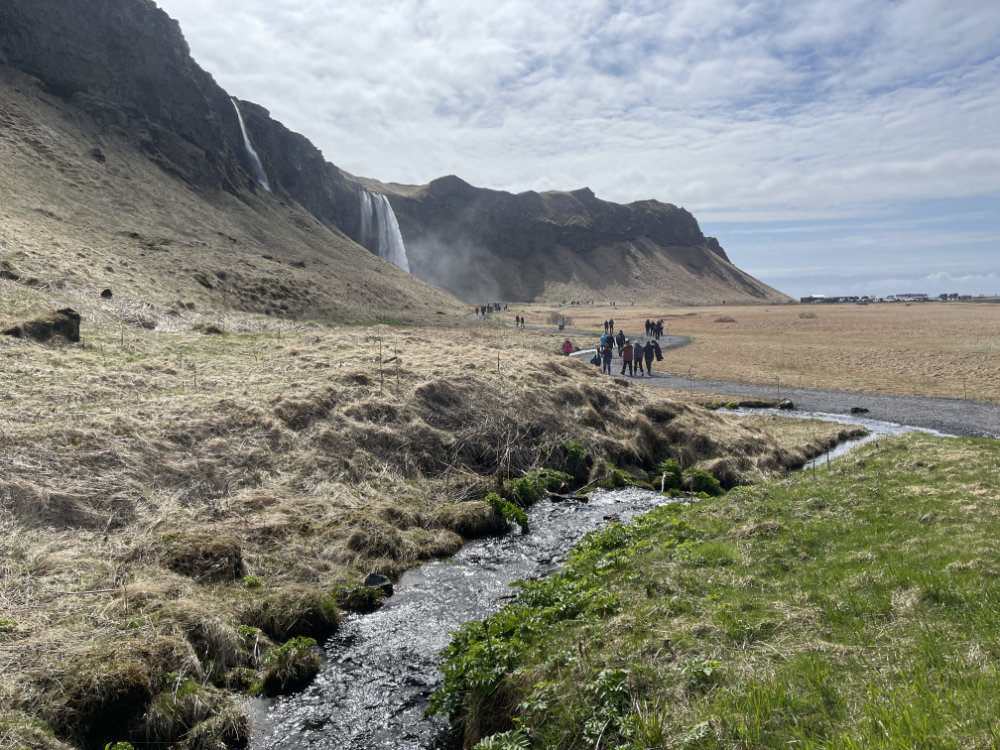
The sunny days we spent in Reykjavik turned out to be an anomaly for early May, and the weather reverted to rainy, windy type for the next few days. This seemed a good time to either seek dry shelter or just embrace the wet. We did both, getting drenched under some waterfalls then heading up into the hills to take refuge in a reconstruction Icelandic Saga-age longhouse.
Seljalandsfoss waterfall
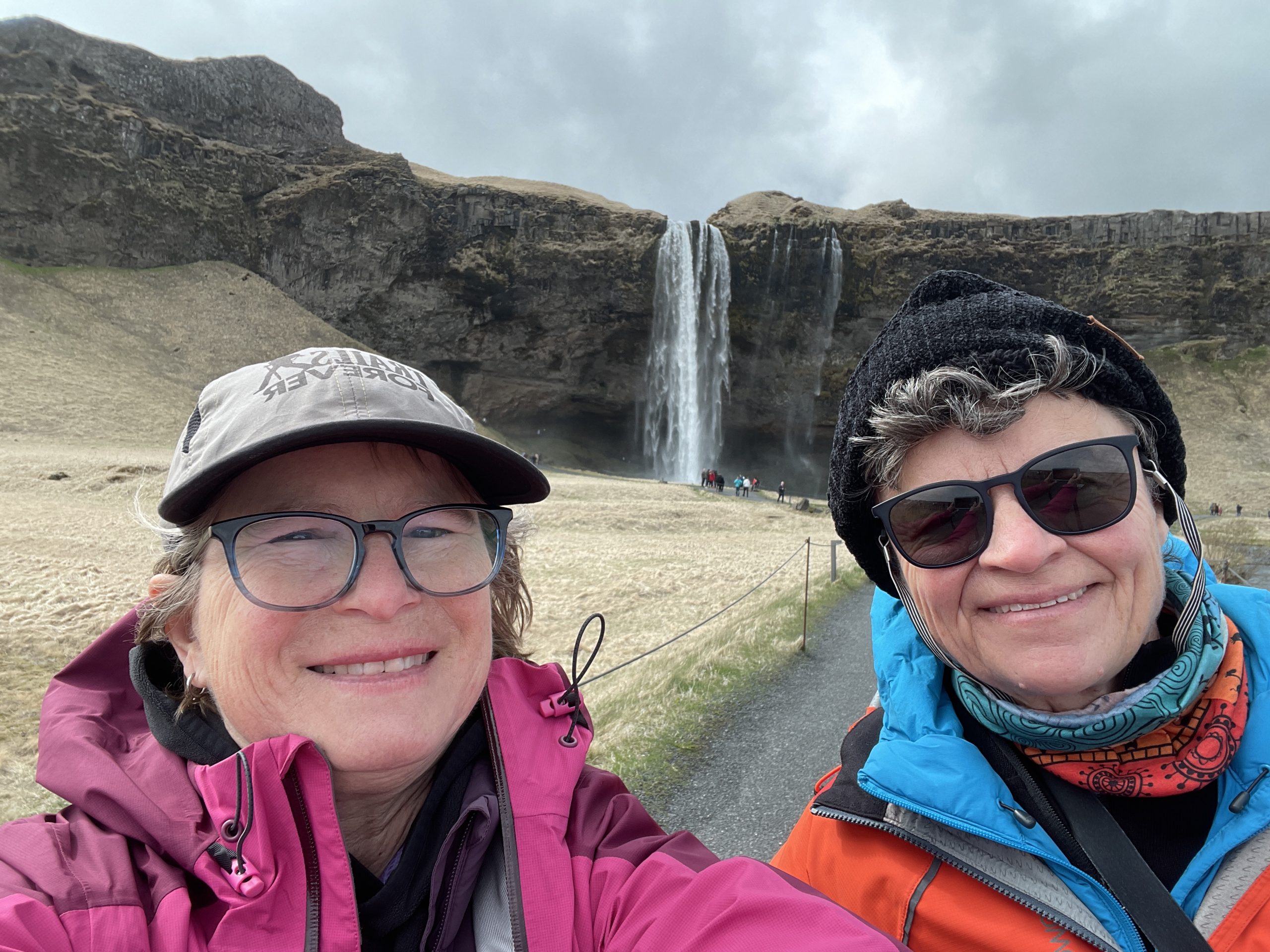
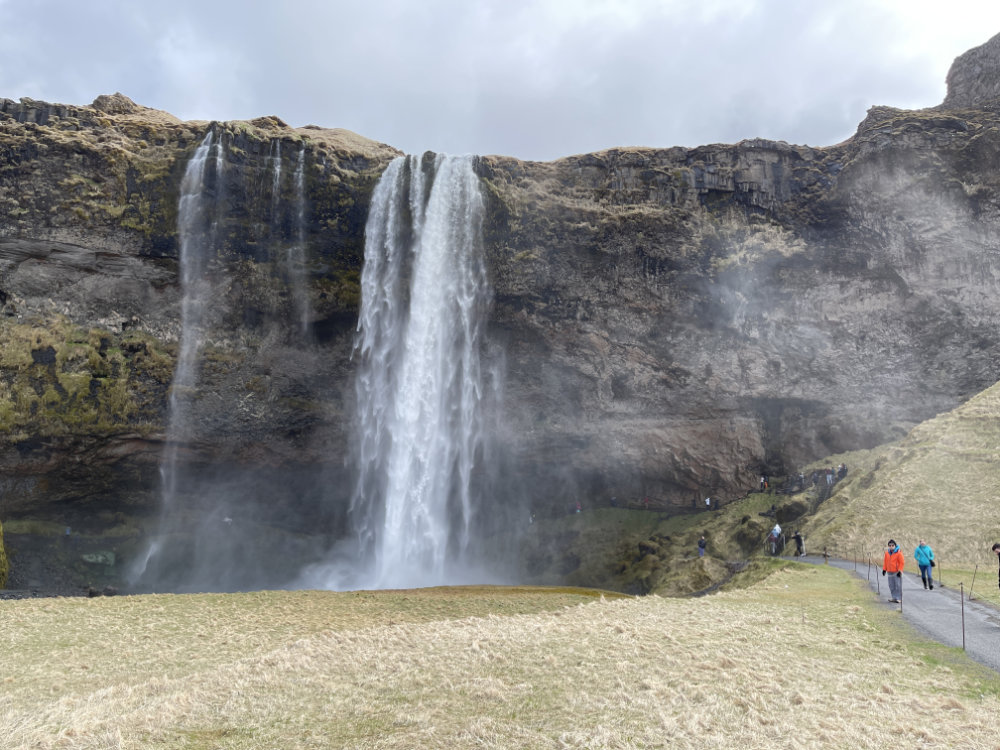
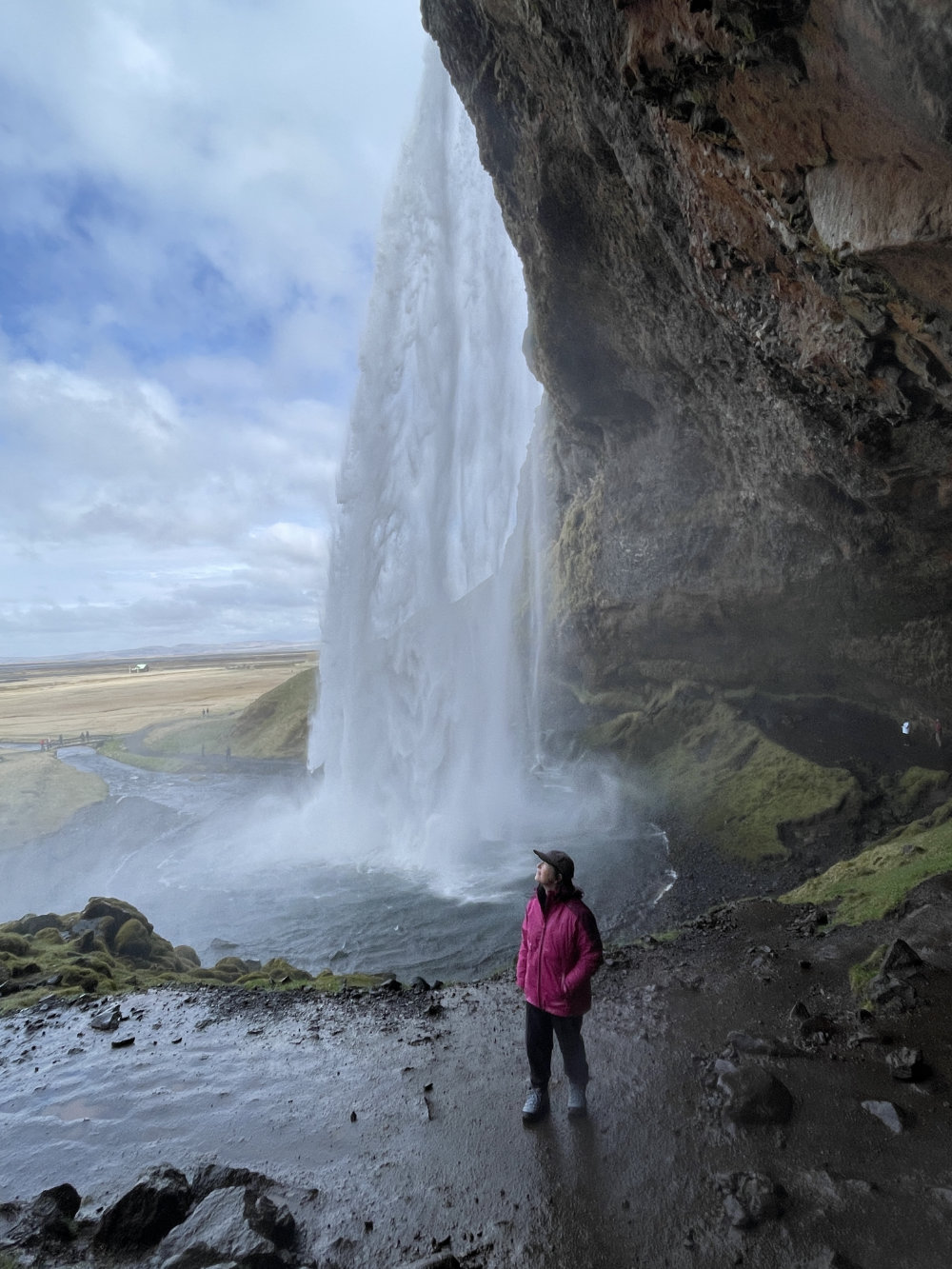
Driving along the Ring Road, you suddenly spot a brilliant streak of white in the basalt-dark cliffs. Up close, Seljalandsfoss is a roaring monster arching from the clifftop and spilling 200 feet down into a roiling pool. You can take a little rocky trail up, behind it, and down the other side if you are willing to get drenched. We were, and we did.
Gljufrabui waterfall
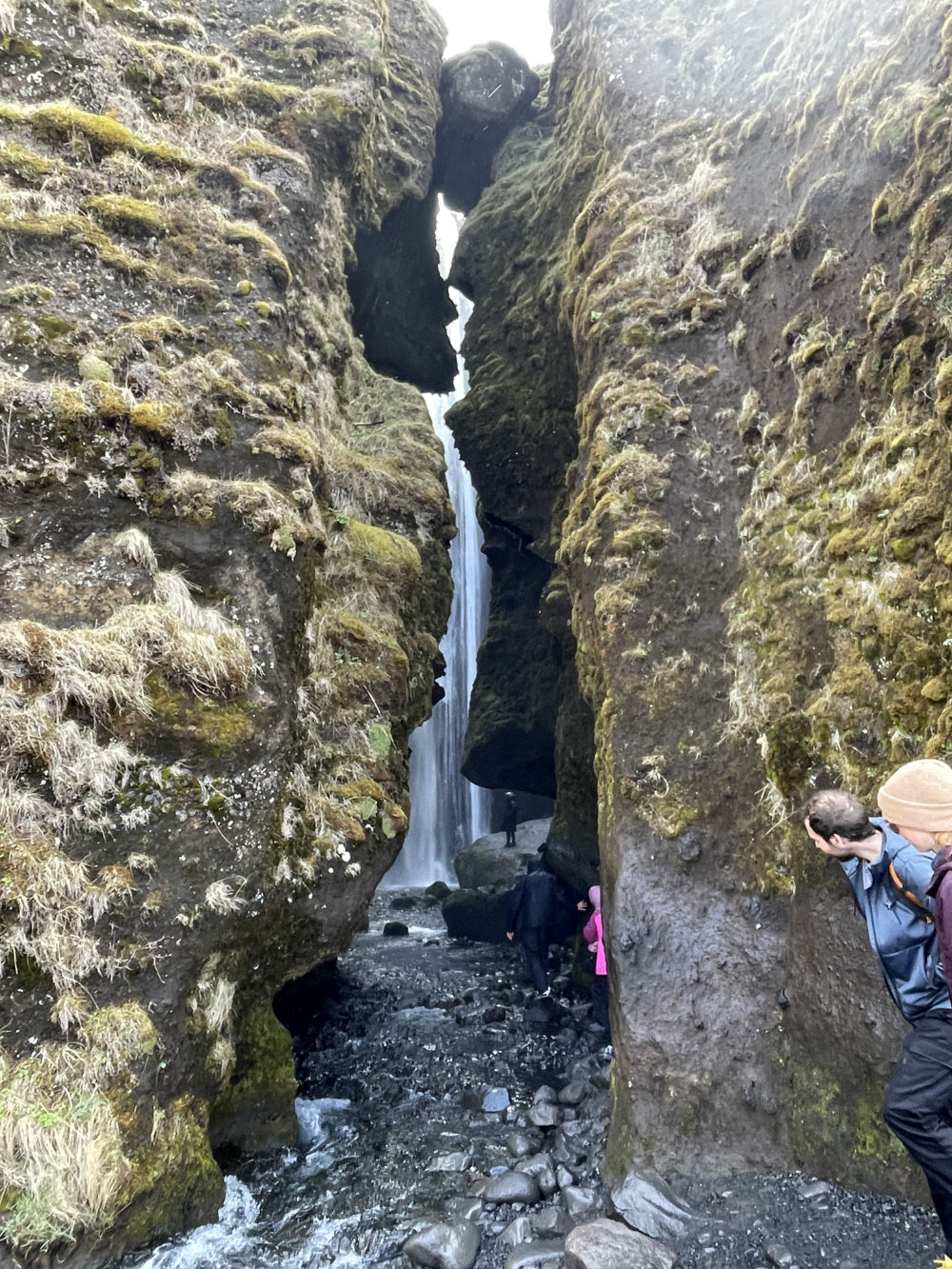
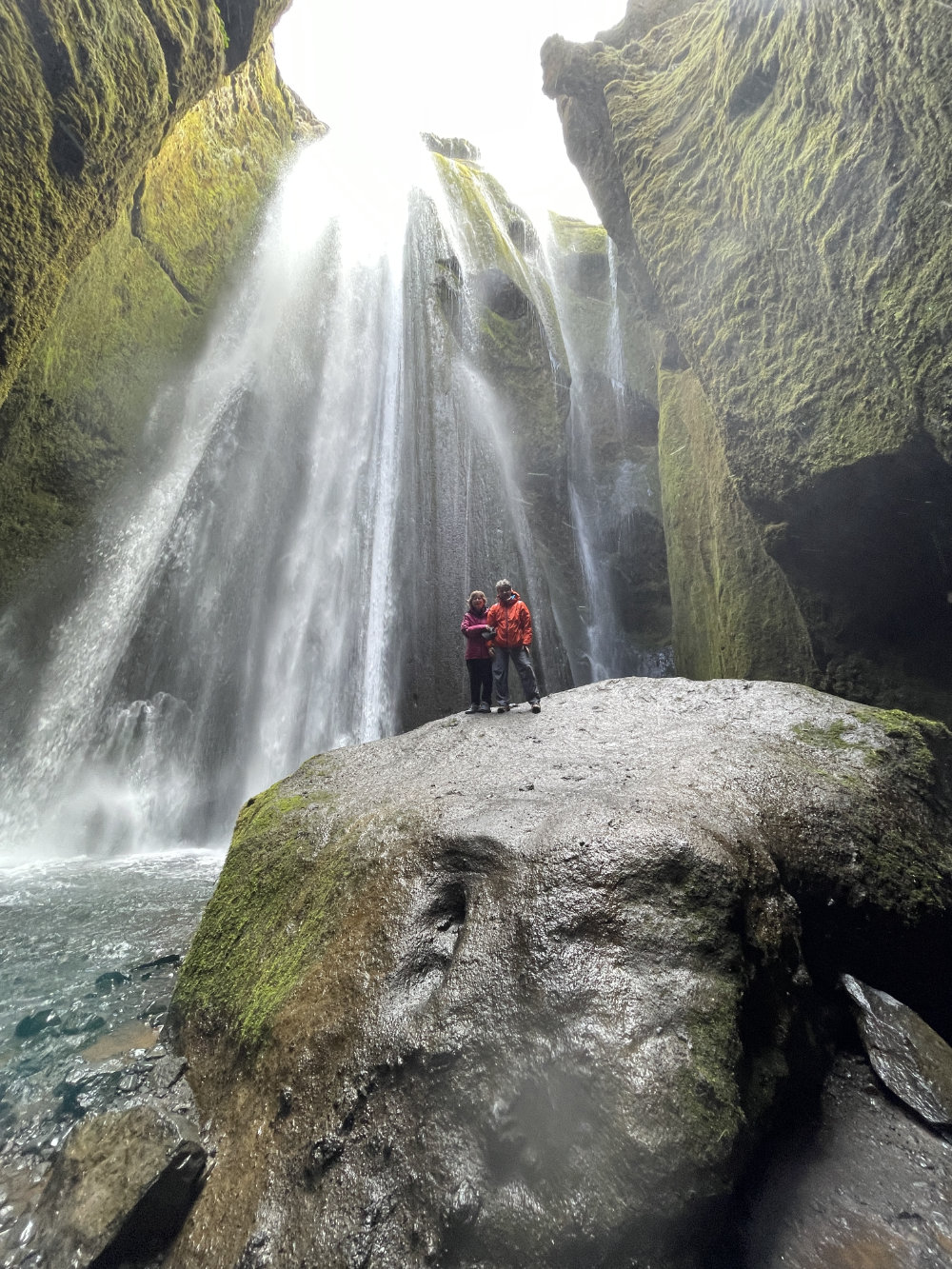
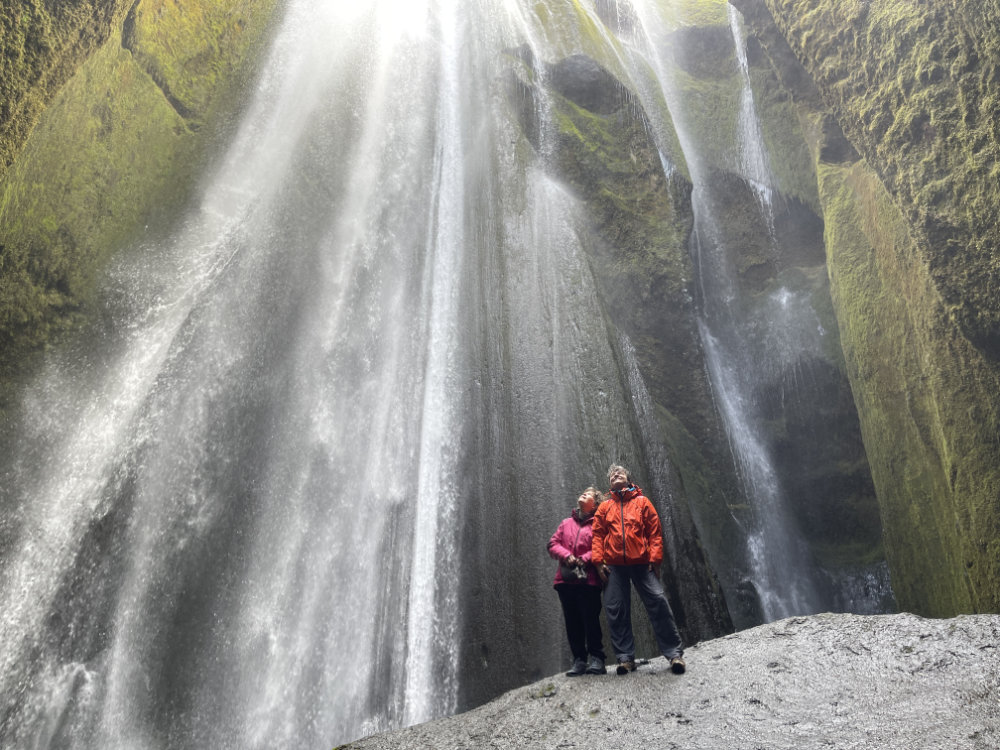
Just a short walk from Seljalandsfoss is Gljufrabui. This waterfall is smaller and hidden, but clambering through a slit in the cliff face to find this room of pounding water is magical.
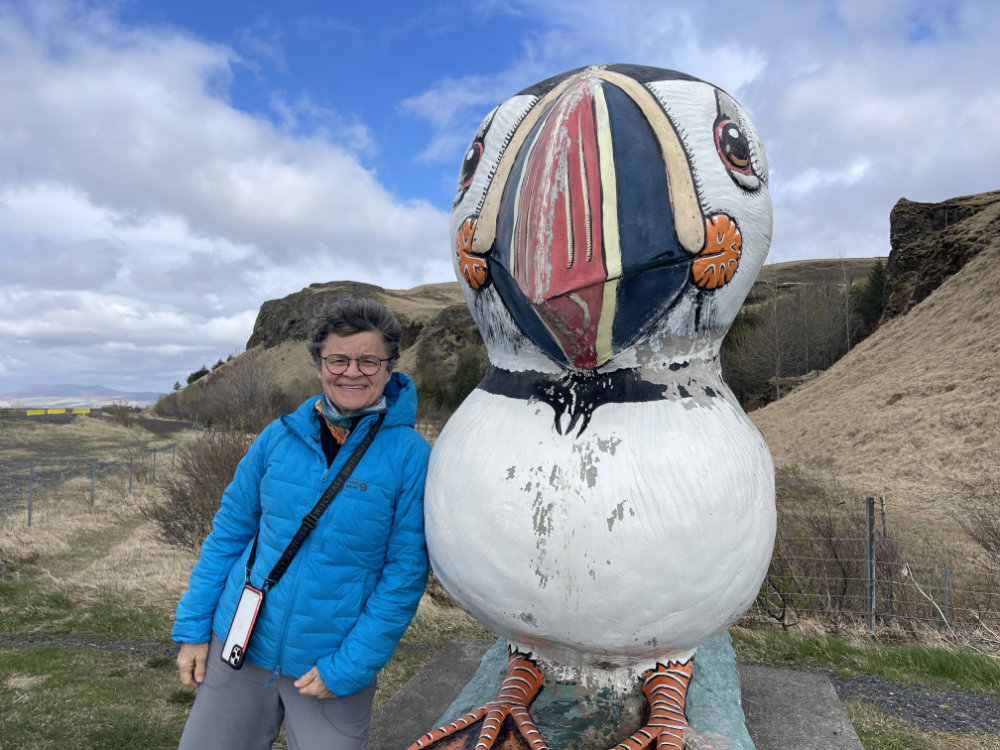
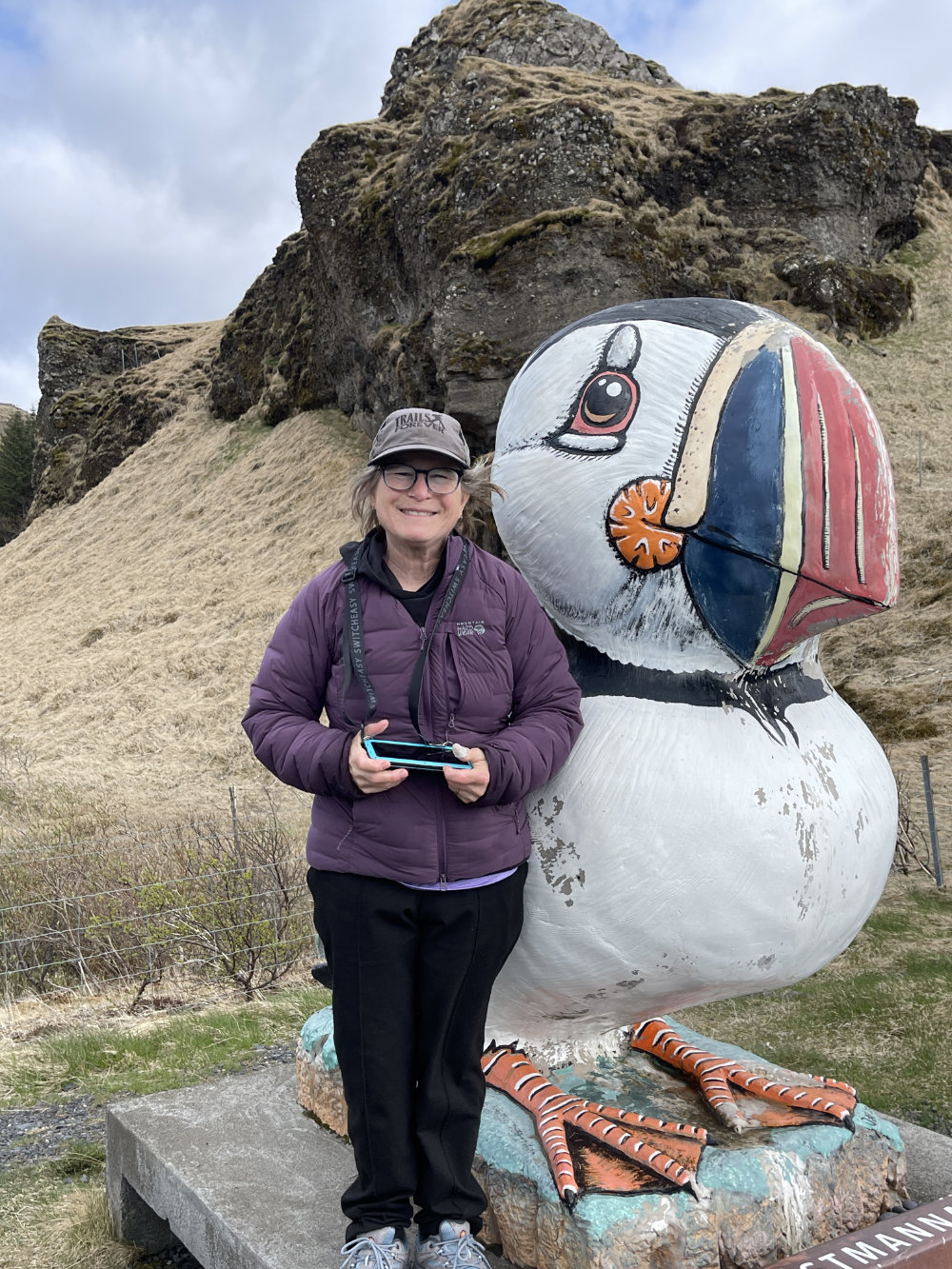
Oh, and we met some puffins.
Þjóðveldisbærinn Saga-age farm
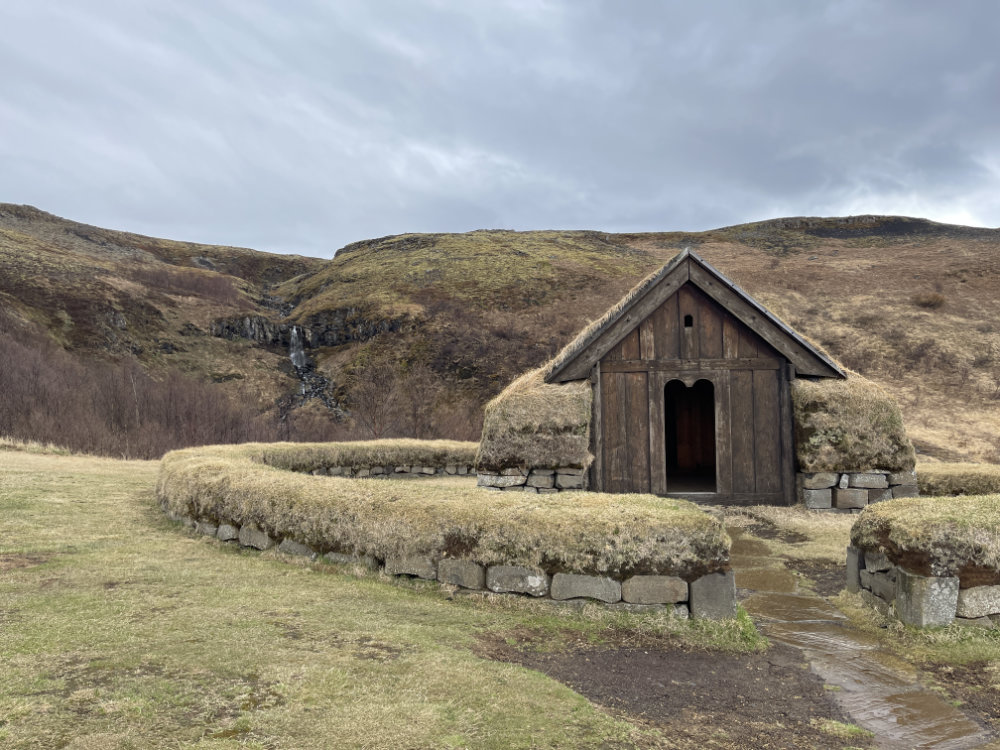
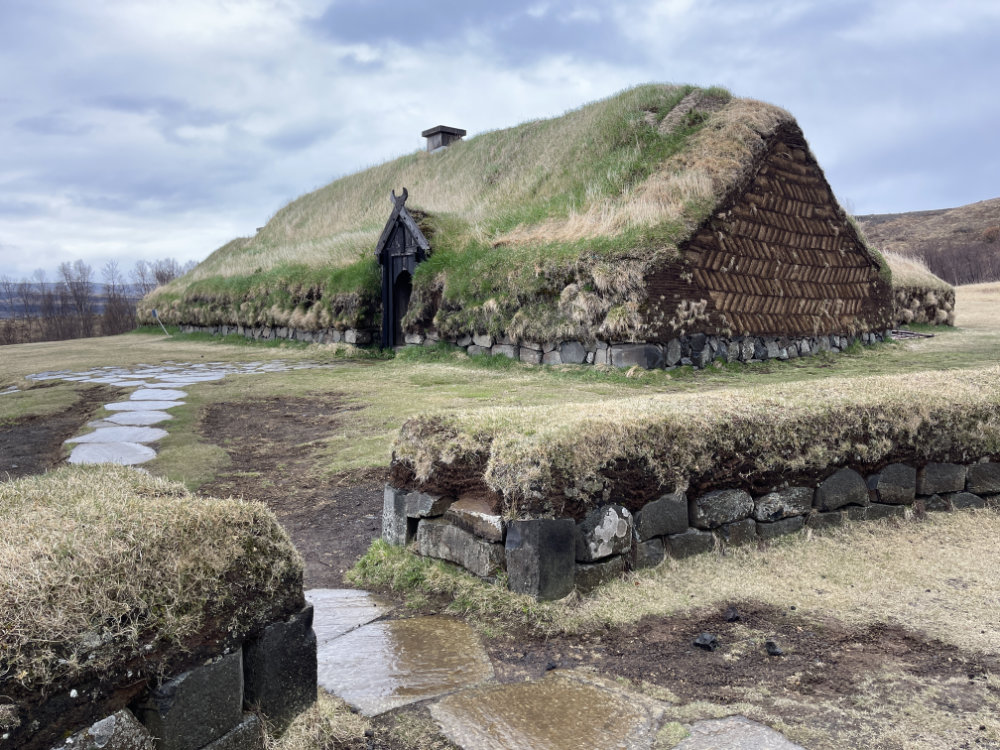
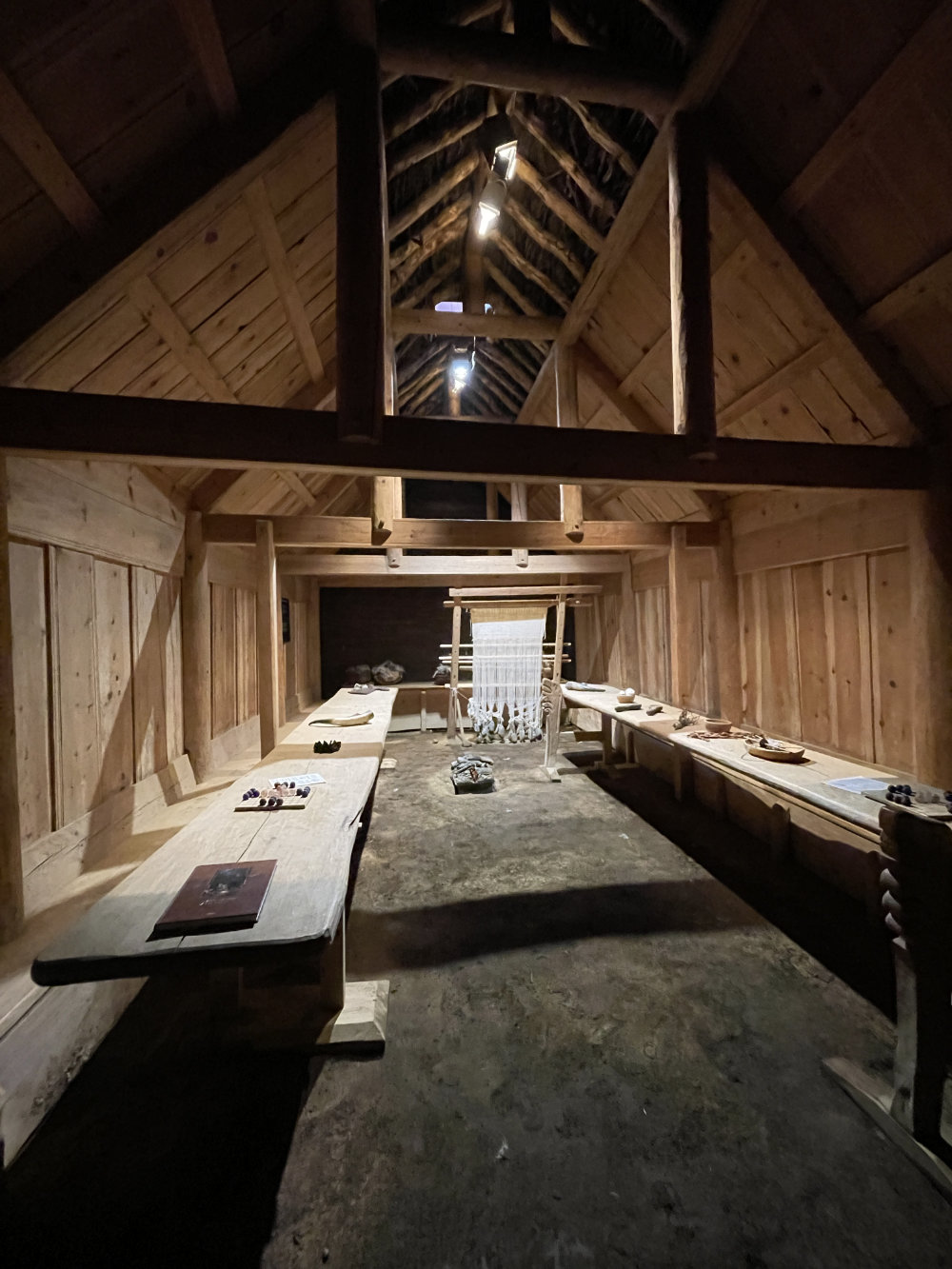
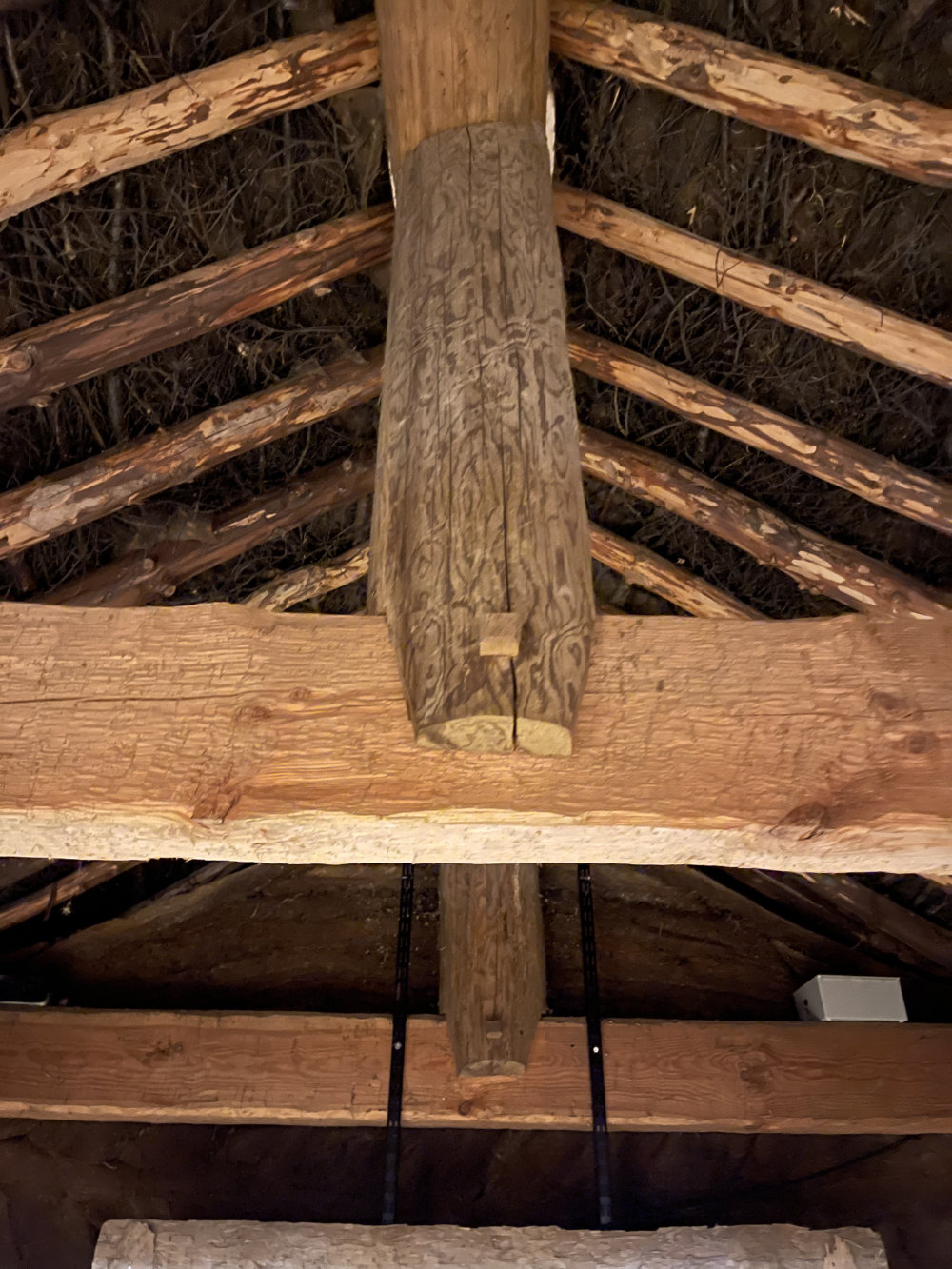
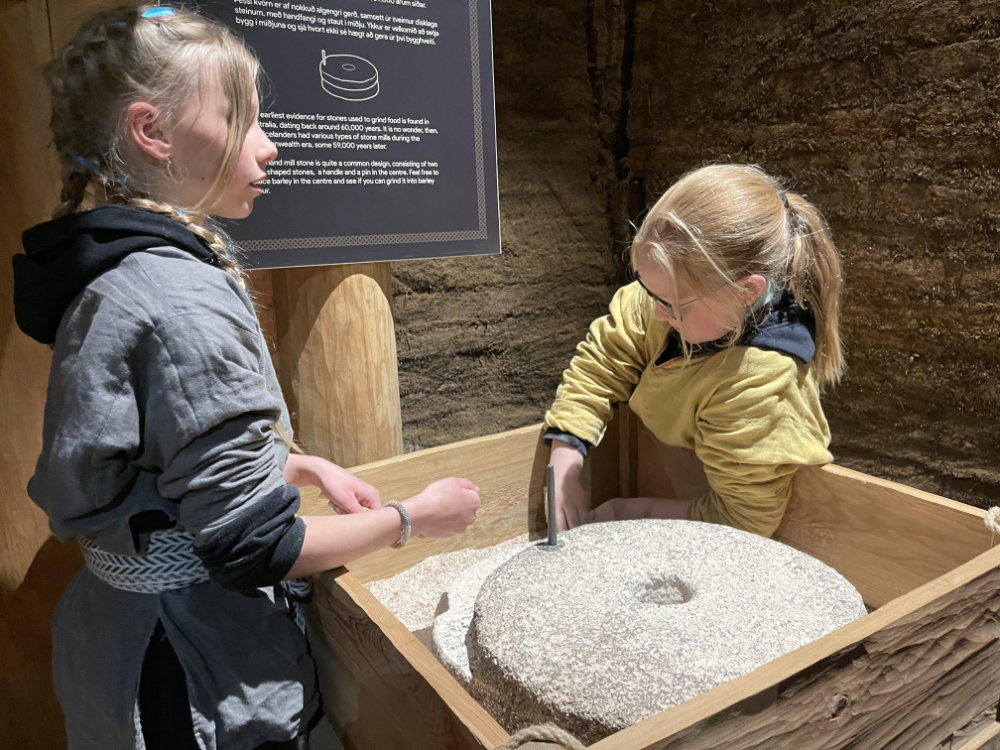
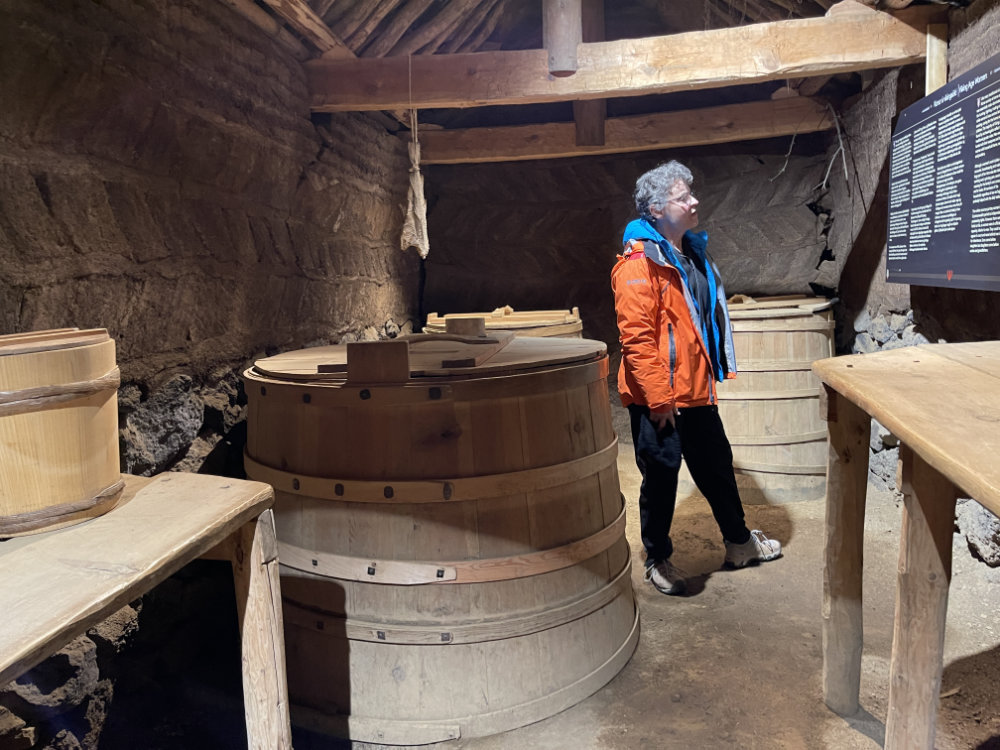
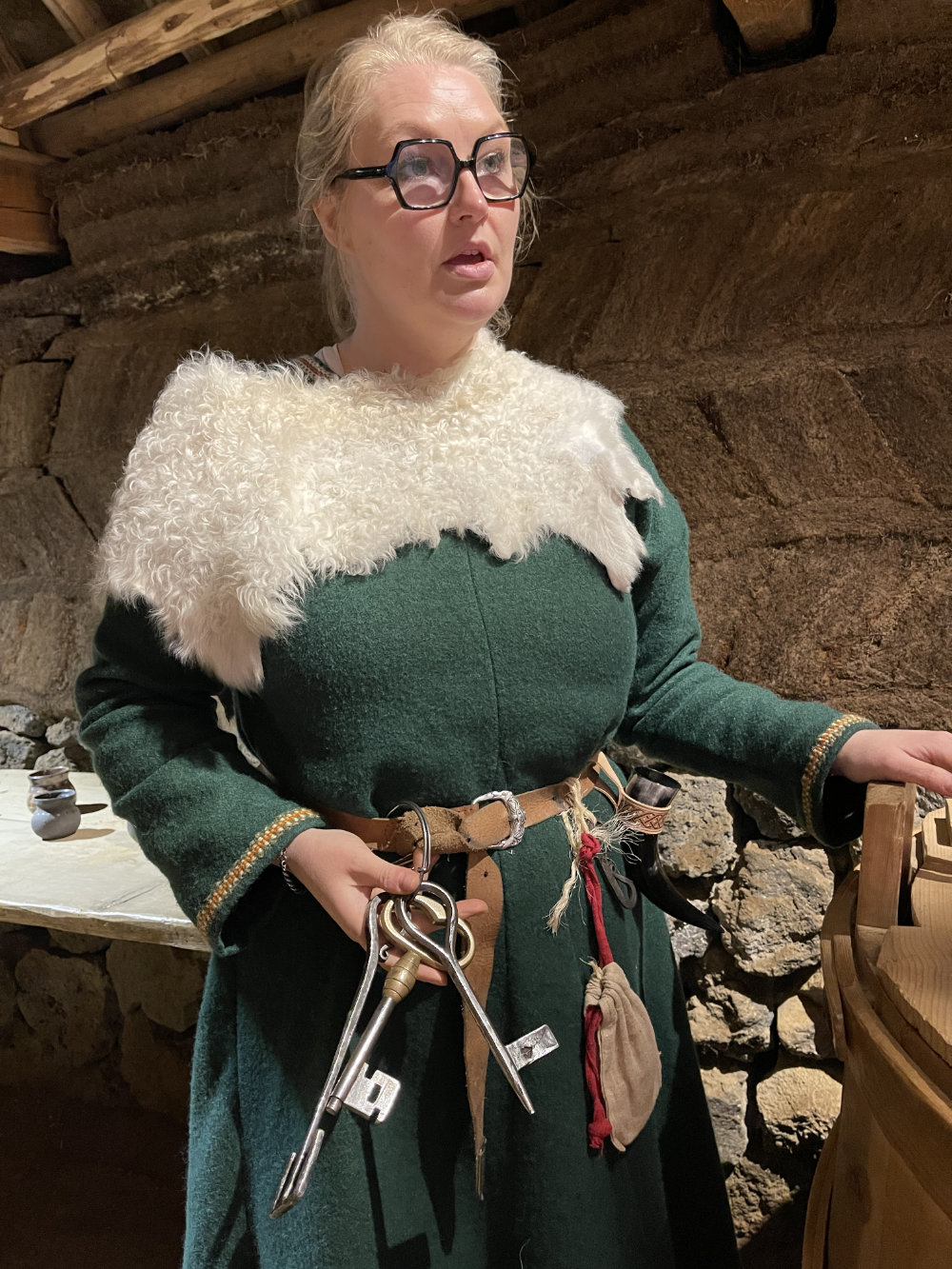
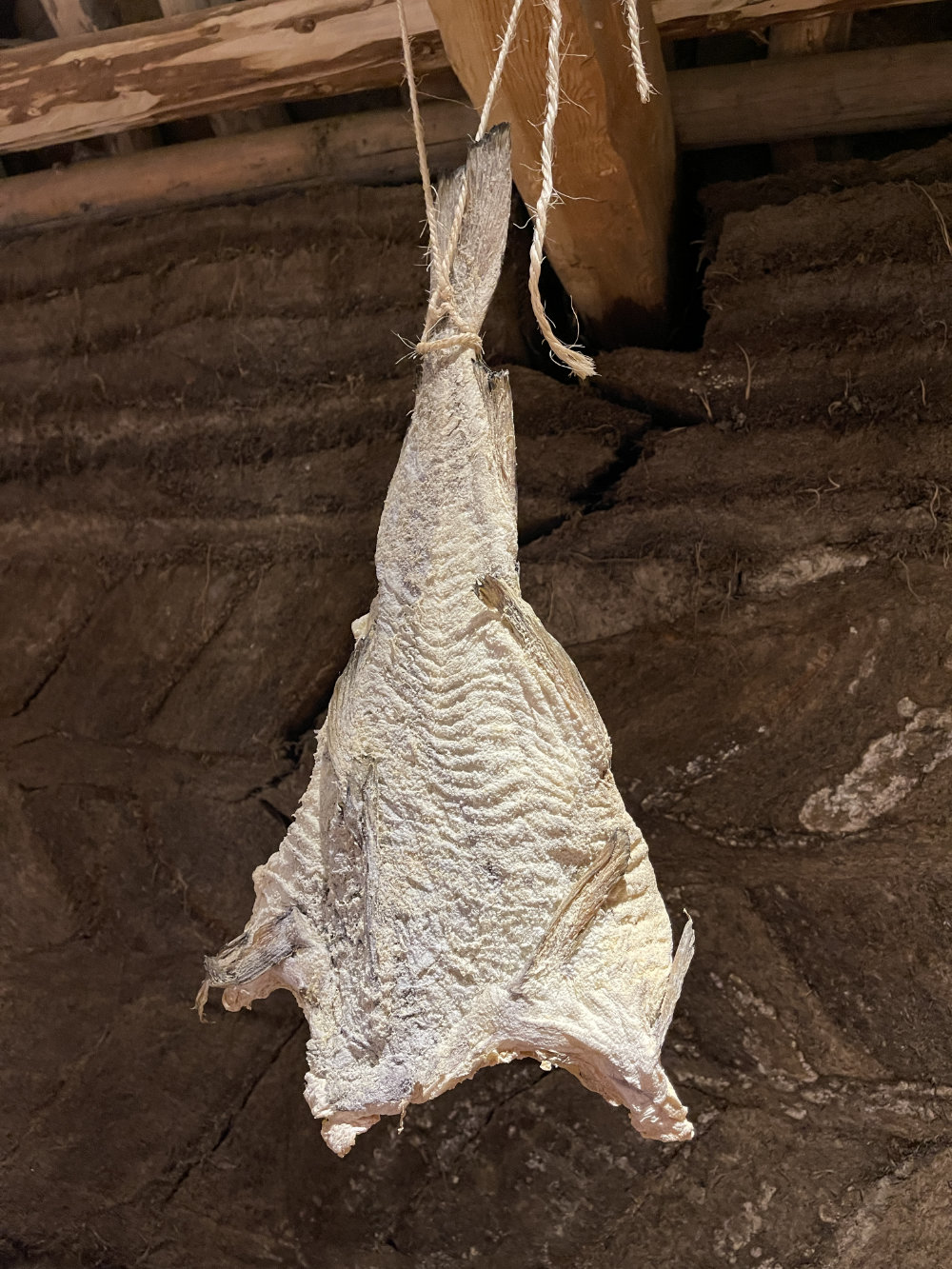
An hour inland, in a beautiful mountain valley, is the reconstructed Viking longhouse of Þjóðveldisbærinn. Built entirely by hand with faithful historical accuracy by a team of Icelandic historians and craftsmen, the sod house and outbuildings were inspired by the nearby discovery of a saga-era longhouse found in the 1950s nearby buried in volcanic ash. In theory, you can visit both the archaeological site and the reconstruction, but it turns out the dig was 5 kilometers up a rocky gravel track with a stream to ford so we happily settled with visiting the reconstruction. It was staffed by a tall Icelanding valkeyri in medieval dress (and glasses) and her two adorable tow-headed daughters, who ground some barley for us. There must be some good schools in those backwoods hills, because the little girls spoke perfect colloquial English.